Why does Airline Food Taste Bland?
Airline food tastes bland primarily because high-altitude cabin conditions temporarily dull your senses of taste and smell—not because airlines forget to season their meals.
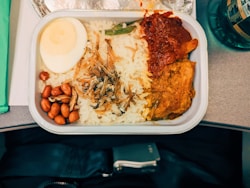
The Physiological & Cabin Factors
* Dry Cabin Air Dulls Your Sense of Smell: Flavor is roughly 80% smell. On some planes, your taste buds are about 30% less sensitive to sweet and salty foods. Aircraft cabins are pressurized to the equivalent of 6,000–8,000 feet above sea level, and the air has extremely low humidity—often less than 15%, which is drier than most deserts. This dries out your nasal passages and reduces the effectiveness of odor receptors, muting subtle aromas before you even take a bite.
* Reduced Sensitivity to Sweet and Salty: Studies (notably by Germany's Fraunhofer Institute for Building Physics) show that simulated flight conditions reduce human sensitivity to sweet and salty flavors by up to 30%. Because salt and sugar are the primary flavor enhancers in cooking, their suppression makes food taste flat.
* Background Engine Noise: Constant cabin noise (around 80–85 decibels) interferes with brain processing of taste. Research demonstrates that loud background noise suppresses sweet and salty perception while surprisingly enhancing umami (savory) perception.
* Reheating & Food Safety Constraints: Airline meals are cooked on the ground, blast-chilled, stored, and reheated in convection or steam ovens at cruising altitude. Delicate textures, fresh herbs, and subtle sauces degrade during chilling and reheating, further flattening the flavor profile.
How Airlines Compensate
To counter this sensory dulling, airline chefs deliberately engineer menus differently from ground restaurants:
* Heavy Use of Umami: Since umami receptors remain largely unaffected by altitude and noise, menus rely heavily on umami-rich ingredients like tomatoes, mushrooms, Parmesan cheese, soy sauce, miso, and braised meats (which is also why tomato juice and Bloody Marys are disproportionately popular on flights).
* Extra Seasoning & Acidity: Chefs add roughly 20–30% more salt, spices, and acidic elements (like lemon juice, vinegar, and aromatics) than they would in a restaurant so the food registers normally at 35,000 feet.
* Extra Seasoning & Acidity: Chefs add roughly 20–30% more salt, spices, and acidic elements (like lemon juice, vinegar, and aromatics) than they would in a restaurant so the food registers normally at 35,000 feet.
With an impressive $500 million food budget, Singapore Airlines’ catering chefs produce 19 million in-flight meals each year, offering a variety of menus from 77 different departure cities. Food and beverage director Antony McNeil develops meals that can regenerate well in small aircraft ovens while still tasting good. He uses ingredients like turmeric, which help reduce swelling and inflammation in the body, making you feel much more comfortable. Ginger is also included for its benefits in promoting sleep, rest, and relaxation. They avoid dishes that don't travel well like deep-fried food.
- co-written with Gemini
🍊🥑🍳🍞🍇


Comments
Post a Comment