Black vs White Sesame Seeds: Same Family, Different Personality
Black and white sesame are siblings, not rivals. White til is milder and a touch higher in protein and iron. Black til is bolder, slightly bitter, and much higher in calcium, with a little more zinc and magnesium. Fat, fibre, and calories are almost the same.
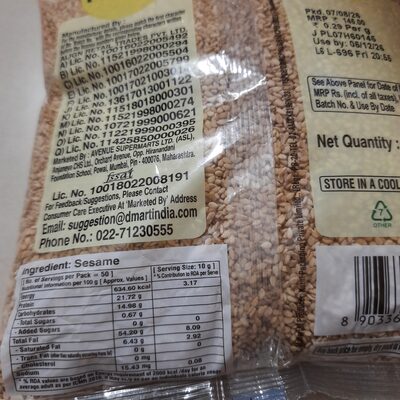 |
| Image: Open Food Facts |
What’s the actual difference?
Colour - Both start life as the same species. The colour difference comes from the seed coat (the outer hull) and the particular variety. Black sesame is almost always sold with its hull still on. White sesame is often hulled (the thin outer layer removed), which is why it looks smoother and milder. That hull is where a good chunk of the fibre, some minerals and plant compounds hang out. So when people say black sesame is “more nutritious,” they’re often really talking about the hull staying put.
Taste - Flavour-wise, black sesame is a bit earthier and more assertive — the kind of taste that stands up in a strong podi or a dark sweet. White sesame is milder and nuttier, perfect for tempering, baking, or when you don’t want the seeds to shout over everything else. Both roast beautifully and smell wonderful when you dry-roast them for a minute. No need to pick a permanent side.
Nutrition according to Indian Food Composition Tables 2017, ICMR National Institute of Nutrition (the Indian numbers that matter) - ICMR-NIN analysed samples of gingelly seeds grown and sold in India. Here’s the comparison per 100 g of edible portion -
| Nutrient / Compound | Black Sesame (H009) | White Sesame (H011) | Notes / Role |
|---|---|---|---|
| Energy | ~508 kcal (2,124 kJ) | ~520 kcal (2,174 kJ) | High-energy oilseed |
| Protein | 19.17 g | 21.70 g | Rich in methionine; complements lysine-rich pulses/dals |
| Total Fat | 43.10 g | 43.05 g | Predominantly unsaturated fatty acids (oleic and linoleic) |
| Carbohydrates | 10.29 g | 10.83 g | Available carbohydrate values from IFCT 2017 |
| Total Dietary Fiber | 17.16 g | 16.99 g | Supports gut health and slows glycemic response |
| Calcium | 1,664 mg | 1,283 mg | Among highest in IFCT - 1st of 242 foods for calcium; bioavailability tempered by oxalates/phytates |
| Iron | 13.9 mg | 15.04 mg | Non-heme iron; pairing with Vitamin C aids absorption |
| Zinc | ~8.59 mg | ~7.8 mg | Supports immune function and tissue repair |
| Magnesium | ~390 mg | ~368 mg | Supports muscle, nerve, and energy metabolism |
| Potassium | ~469 mg | ~399 mg | Supports fluid balance and blood pressure regulation |
| Copper | ~2.29 mg | ~1.63 mg | Important for iron transport and enzymatic reactions |
| Folate (Vitamin B9) | ~127 mcg | ~97–115 mcg | Supports cell division and red blood cell formation |
| Vitamin E & K1 | Vitamin E ~1.08–2.5 mg; K1 ~110 mcg | Vitamin E ~2.3 mg | Lipid antioxidant protection and coagulation support |
| Sesamin, Sesamolin & Phytosterols | High lignans & phytosterols + dark pigments | High lignans & phytosterols | Sesame lignans resist oil oxidation and support lipid health; black adds dark seed-coat pigments |
Black sesame shows slightly higher zinc and magnesium in the Indian samples, while white edges ahead on protein and iron. Both are rich in healthy fats (lots of mono- and polyunsaturated) and essentially cholesterol-free.
Sesame is a recognised allergen, and reactions can be severe.
Sesame contains phytates and oxalates. These can reduce how much calcium and iron your body actually absorbs. Roasting, grinding, and eating them with vitamin-C-rich foods (lemon, amla, tomatoes) help.
So which one should you buy?
- Want maximum calcium and that deeper flavour for podi or traditional winter sweets? Reach for black.
- Prefer a milder taste, slightly higher protein, and something that disappears nicely into tempering or baked goods? White is perfect.
- Best answer for most Indian homes: keep both. Use whichever the recipe (or your mood) asks for.
A tablespoon of either gives you a little protein, good fats, fibre, and a meaningful sprinkle of minerals. Pair them with dals and grains the way Indian food already does — the amino acids complement each other beautifully.
Til has been part of our winters, festivals and everyday cooking for centuries. The colour is just the outer jacket. Inside, both are the same reliable, nutrient-dense little seed that has quietly earned its place in the kitchen.



Comments
Post a Comment