Argemone oil - Extracted from Argemone seeds. Mixed with mustard oil or other edible oils to increase quantity as it is cheaper. Causes glaucoma, dropsy, and sometimes total blindness due to alkaloids.
Mineral oil (particularly a distillate of petroleum) - Added to edible oils (especially mustard oil) as a cheap substitute. Adversely affects health.
Castor oil - Used as a cheaper adulterant in some blended oils. Poses health risks.
Olive Pomace/Residue oil -
Mixed into refined olive oil. Pomace is the cheaper residue left after olive processing.
Excessive Free Fatty Acids (from rancidity) - Formed during decomposition of triglycerides in old or poorly stored oils. Indicates rancid oil, which can develop harmful free radicals leading to long-term cell damage and chronic diseases.
Dimethylpolysiloxane (DMPS), Butylated Hydroxyanisole (BHA), and Tert-Butylhydroquinone (TBHQ) are antioxidants added to edible oils to prevent oxidation and spoilage. The FSSAI has set specific limits for these additives, as consuming them in high concentrations over time could be harmful to human health.
Since adulterants can be reliably detected and measured only by labs using advanced methods, choose reputable brands with an FSSAI license, read labels carefully, and opt for packaged oil over loose varieties.
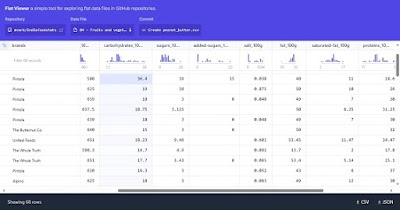
I analyzed 71 products (with known nutrition facts as of July 13, 2025) in the Peanut Butters category of the India database of Open Food Facts - the 'Wikipedia of food'. The data, which has been obtained from Open Food Facts and subsequently cleaned, is available on GitHub in CSV format . You can also view that curated dataset with the Flat Viewer tool . View, Sort, Filter the data in Flat Viewer Here are my findings and fun facts I discovered - * Non-standard weights make price comparison challenging for shoppers. Below is a list of the Maximum Retail Price for Unsweetened Peanut Butter of the highest available weight for various brands, as taken from Amazon at the time of writing - Alpino Natural Peanut Butter, Unsweetened, Smooth 1kg - ₹449 24 Mantra Organic Peanut Butter (Creamy), 800gms - ₹449 Veeba Natural Peanut Butter Unsweetened 1kg - ₹450 The Whole Truth Unsweetened Peanut Butter | 925 g - ₹515 The Butter...
Wondering which one to buy? Saffola Oats Multigrain or Quaker Oats Multigrain Both have almost similar ingredients in varying proportions but Saffola Oats Multigrain additionally has Jowar flakes (18%) and Quinoa flakes (3%) for variety. If you’re avoiding added sugar, Quaker Oats Multigrain has just 1.2g per 100g, which might still be a dealbreaker if you’re really strict about it. Product Ingredients Saffola Oats Multigrain Oats (60%), Jowar flakes (18%), Wheat flakes (6.5%), Barley flakes (6.5%), Quinoa flakes (3%), Ragi flakes (3%), Flax seeds (2%), Refined Rice bran Oil, Flavor (Natural Flavouring Substance) . Quaker Oats Multigrain Wholegrain Whole Oat Flakes (60%), Wheat Flakes (18%), Barley Flakes (10%), Ragi Flakes (5%), Flax Seeds (5%), Sugar , Iodised Salt, Malt Extract, Flavor (Natural Flavouring Substances) . If we zoom in on the macros (per 100g), here’s the rundown: Nutrient Saffola Multigrain Oats Quaker Multigrain ...
If you're keen on taking charge of your nutrition and feel limited by services like HealthifyMe or RecipeDB, you'll be happy to know about the Indian Nutrient Databank (INDB) ! This well-researched, Open Access Food Database (^Github) offers comprehensive insights into the nutritional aspects of both raw foods and commonly consumed Indian recipes, helping you manage your health better. The INDB consists of two main components: a database of nutrient composition for 1,095 individual food items and a database of 1,014 commonly consumed recipes. Nutrient details of the food items & recipes are also available together as a downloadable Excel file from the website of Anuvaad Solutions or from GitHub . Whether you're a health enthusiast, a researcher, or a policymaker, the INDB offers unprecedented insight into the Indian diet. Chart from the research study shows that the nutrient content of commonly consumed composite dishes varied considerably The raw food ...


Comments
Post a Comment