What a Monkey Knew About Food That I Didn't
A few years ago, a monkey broke into my hotel room in Nandi Hills.
I'd been warned to keep the balcony door shut. But in the chaos of vacation, it slipped open just enough.
The simian surveyed my room like it owned the place.
My first instinct?
Grab something and throw at it.
But curiosity won. I let it explore.

On the table sat a buffet of temptation: chips, biscuits, chocolates - India's finest packaged snacks.
The monkey glanced at them.
Walked past.
Sniffed my backpack on the sofa.
Reached in, pulled out an orange I'd forgotten I had, and left.
I stood there, stunned.
It chose the only real food in the room.
For years, I never thought twice about what I ate.
Convenience ruled.
Taste mattered.
And I trusted the brands I grew up with to handle the "nutrition" part.
But do they?
My curiosity led me to Open Food Facts (OFF), an open-source database of packaged foods from around the world.
The OFF database contains details of over 4 million products from more than 180 countries, with over 30 countries each having more than 10,000 products. It is strictly independent from the food industry.
What I found while contributing to OFF and analyzing the data changed how I shop, eat, and think about food forever.
I realized I was trusting brands blindly for years; my health, my family’s health, was on autopilot.
OFF has examined the ingredients of over 10,000 products in India, and it turns out, much like in the rest of the world, sugar, salt, and fat dominate as the holy trinity of the food industry.
Ultra-processing is simply the factory that turns that trinity into an addiction.
The first time I checked OFF, I was shocked to see that even something as common as packaged bread was classified as Ultra-Processed Food (UPF) as manufacturers add a variety of additives.
Several well-researched studies, including the latest from The Lancet, have linked Ultra-Processed Foods with health issues and they’re everywhere.
The Global Crisis
The numbers are staggering.
* Adult obesity has more than doubled since 1990.
* Adolescent obesity has quadrupled.
* In 2022, 1 in 8 people globally lived with obesity.
* India is becoming the diabetes capital of the world.
BTW, What is Ultra-Processed Food?
Ultra-processed foods (UPFs) aren't just "processed." They’re formulations built from extracted food substances, additives, and industrial processes. It doesn't have a standard definition though.
UPFs often contain:
* Extracted ingredients (whey, lactose, gluten)
* Highly modified substances (maltodextrin, hydrogenated oils, high-fructose corn syrup, protein isolates)
* Emulsifiers, stabilizers, additives for taste, colour, mouthfeel, shelf-life
* Artificial colours and non-sugar sweeteners
* Industrial processes like extrusion, hydrogenation, pre-frying
Their purpose?
To create low-cost, addictively tasty, durable products that replace real food.
In a country where many households juggle long commutes, rising food costs and little time to cook, UPFs fill real gaps.
Cost, shelf life, convenience are definitely a plus in certain cases but when the calories are empty and the formula is built to keep you reaching for more, convenience starts to look like a different kind of cost.
UPFs push out local food systems often with slick advertising and when overused, drive up healthcare costs.
The Scale of the Problem
In the United States, over 73% of the food supply is ultra-processed.
India's percentage? Unknown.
Here's why that's alarming: According to DataKart, the national product data repository maintained by GS1 India, there are 42.6 million+ barcoded products from 31,000+ companies in India.

If even 25% of the barcoded packaged products are food and beverages, that's over 10 million packaged food items, largely unanalyzed.
This is where crowdsourced, open data from Open Food Facts becomes critical.
By applying OFF’s NOVA classification to Indian packaged foods, we can finally see what we’re eating.
Spoiler: it’s… eye-opening.
But first, what's NOVA?

Group 1 → Unprocessed or minimally processed (fruits, milk, rice)
Group 2 → Culinary ingredients (salt, oil, sugar)
Group 3 → Processed (cheese, canned veggies, freshly baked bread)
Group 4 → Ultra-processed (pretty much everything in shiny packaging)
What the Open Food Facts Data Reveals
Applying the NOVA classification system to Indian products on Open Food Facts exposes a troubling pattern - over 50% of some of the oldest & most popular brands are UPFs!
From the 18,000+ products in OFF’s India dataset, covering more than 3,000 brands, I focused on the major national brands with products on OFF that had the essential info for the NOVA calculation.Some brands associated with "freshness" or "wholesomeness" sell heavily ultra-processed products.
Need a sweet surprise? Guess the main ingredient in the product lineup of the confectionary brand with 98% UPFs?
Latin American countries like Mexico, Chile, Peru, Uruguay introduced sugar taxes, clear labeling, and junk-food advertising bans to tackle the dangers of UPFs.
These policy measures have led to measurable reductions in consumption and positive health outcomes.
 |
| In Chile, food products that are high in calories, fat, sugar, or sodium are required to display black octagonal warning labels. |
Unlike in many health-conscious countries which have stricter regulations for packaged food, Front of Pack Nutrition Labelling isn’t mandatory in India.
Consumers are expected to build their own nutritional awareness.
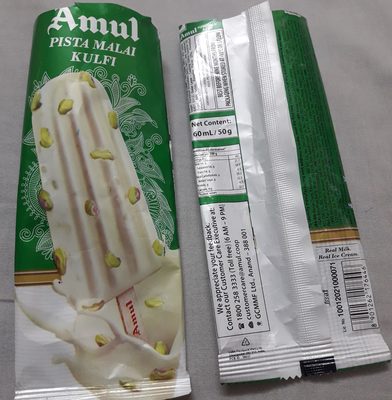


Now, look at this ingredients list of an iconic companion to chai ☕ at street-side stalls across India.


Now that you have seen the big picture, explore the NOVA classification of products for each brand to decide for yourself what's healthy -
This dynamic chart uses almost real-time crowd-sourced data from Open Food Facts (OFF) for product information.
Some products are unrated (shown by the grey bar), because their ingredients haven’t been extracted for some reason. To support food transparency, you can help by adding the missing details on Open Food Facts and making the data more valuable for everyone.
Finally, the Takeaway
We place enormous trust in packaged food brands. But most of them also sell ultra-processed products.
This is what I know now:
⭐ Read labels. Look for UPF markers.
⭐ Prioritize whole foods like vegetables, fruits, grains.
⭐ Appreciate what real food smells and tastes like.
⭐ Choose freshly prepared over factory-made.
That monkey in Nandi Hills didn't read a single label. It just followed its instincts and chose better than I had for years. Maybe the real question isn't what are we eating—it's when did we stop knowing?



Comments
Post a Comment